

From Curiosity to Creation: How XR Women Are Exploring AI
By Julie Smithson
At a recent XR Women gathering, we asked a few simple questions about how the community is using AI with XR today. The responses were revealing.
This is not a group sitting on the sidelines. XR Women are actively experimenting—building chatbots, generating images, designing environments, creating activities, and exploring 3D asset workflows. More importantly, the conversation extends beyond tools into deeper themes of creation, ownership, trust, and our evolving relationship with intelligent systems.
From Curiosity to Creation
When asked what they want to learn, the top interest was creating activities, followed by 3D assets, environments, prompting, and chatbots. This signals a shift: the community is ready to move from theory to practice.
There is a clear opportunity here. Members want hands-on learning—workshops, demos, and collaborative sessions that turn curiosity into capability.
Chatbots Lead Adoption
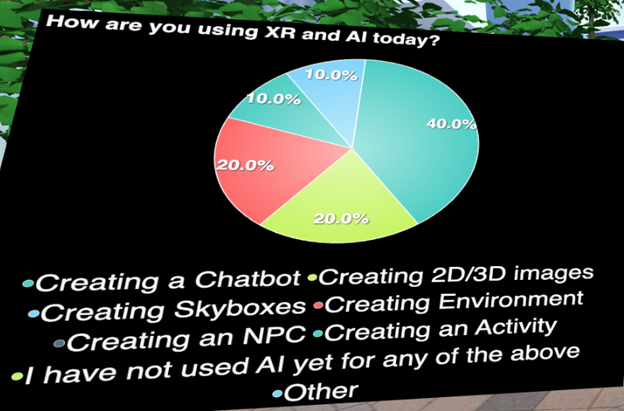
Currently, 40% of respondents are creating chatbots, making them the most common entry point into AI. Their accessibility allows creators to experiment with interaction, guidance, and character development without building full environments.
In XR, chatbots evolve into immersive agents—guides, mentors, hosts, and interactive characters. This is where AI and XR converge: AI brings intelligence and responsiveness, while XR provides presence and embodied experience. Together, they transform how people learn, collaborate, and engage.
Ownership and Ethics Matter
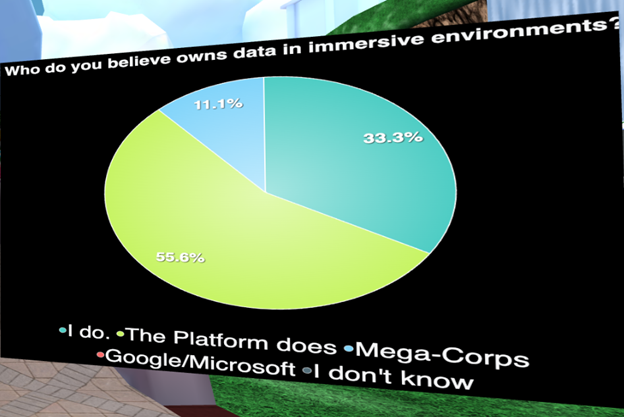
When asked who owns data in immersive environments, 56.6% said the platform. That response highlights a growing awareness—and concern—around digital ownership.
Immersive data goes beyond clicks and preferences. It includes movement, voice, identity, and behavior. As XR expands, so must conversations around data rights, creator ownership, and platform responsibility. Key questions remain: Who owns the experience? The data? The output? And how do users protect their identity?
The future of XR must be not only immersive, but ethical and human-centered.
An Emerging Tool Landscape
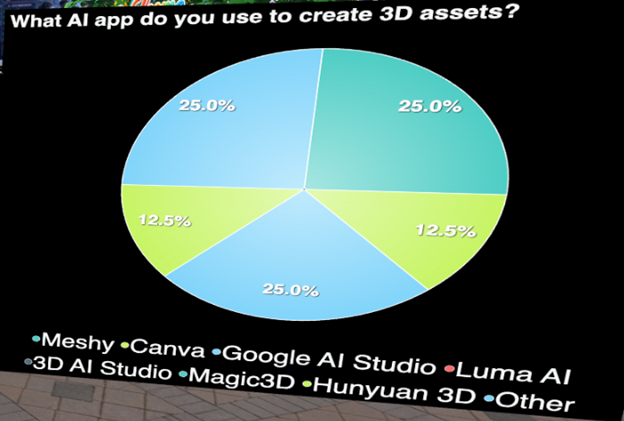
AI tools for 3D creation—such as Meshy, Google AI Studio, and others—show no clear leader. This fragmentation reflects an early-stage ecosystem where creators are still testing workflows and outputs.
While this creates challenges, it also opens space for communities like XR Women to share knowledge, define best practices, and support one another in building effective pipelines.
Humanity Still Leads
A lighter question revealed something deeper: 77.8% said they use “please” and “thank you” with AI.
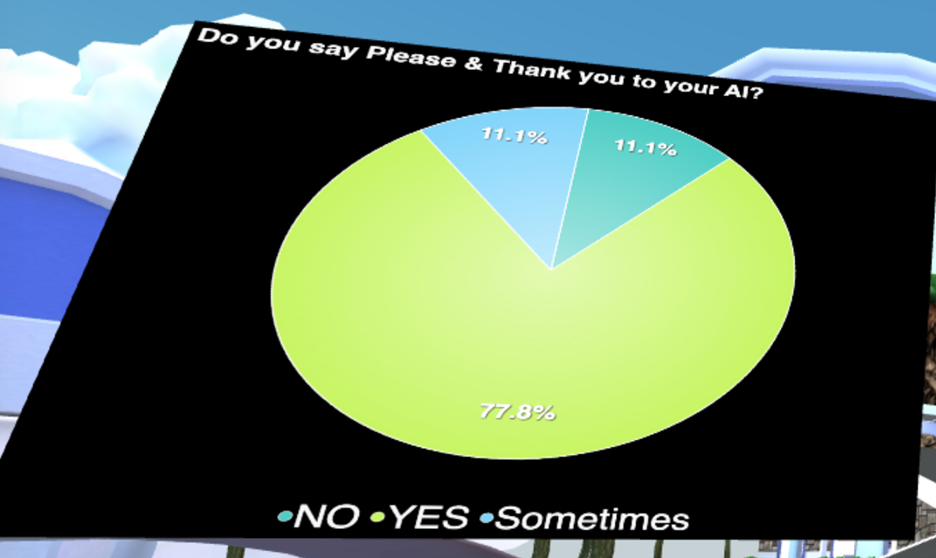
This small habit reflects a larger truth. Our interactions with AI are shaped by human behavior, culture, and values. As these systems evolve, so will our expectations around respect, communication, and ethics.
The Bigger Shift
XR Women is moving from curiosity to active participation—asking how to build, create, own, and stay human in an AI-driven world.
This is where the future of XR and AI must go: not hype or fear, but intentional, informed creation. The next wave will not be defined by tools alone, but by the people willing to shape them.
An Excerpt from An Article by Julie Smithson on LinkedIn. See the full article here: From Curiosity to Creation: How XR Women Are Exploring AI | LinkedIn