

When Governments Pull the Plug: What the Claude Fable 5 Shutdown Means for XR Women
by Christine Hobbi
This past week, the AI world got a wake-up call. On June 12, Anthropic received a US government export-control directive and within hours had disabled global access to its two newest models — Claude Fable 5 and Mythos 5 — for every customer worldwide, including foreign Anthropic employees working on US soil.
The stated reason? National security. Specifically, government concerns about a potential jailbreak vulnerability in Fable 5 that could bypass its safety mechanisms. The deeper backstory is more troubling: the US Department of Defense classified Anthropic as a "supply chain risk" back in March after the company refused to release Claude for mass domestic surveillance and fully autonomous weapons systems without restriction.
Anthropic is calling the directive a "misunderstanding" and working to restore access. But the damage — at least in the short term — is done.

Why this matters for XR Women
Why This Matters for XR Women
Our community sits at the intersection of two technologies — spatial computing and AI — that are increasingly inseparable. XR developers, creators, and educators who had integrated Fable 5 into their pipelines woke up to dead endpoints and halted projects. No warning. No transition period. Just off.
This highlights a fragility many of us have quietly accepted: we've built on foundation models we don't control, hosted in jurisdictions with their own agendas.
The Global Ripple
Europe is watching this closely. The EU AI Act was designed in part to prevent exactly this kind of unilateral disruption — and yet European users and businesses are equally affected when a US directive goes out. The shutdown underscores that "AI sovereignty" isn't just a policy talking point; it's an operational reality that affects anyone building on US-based AI infrastructure.
The Takeaway
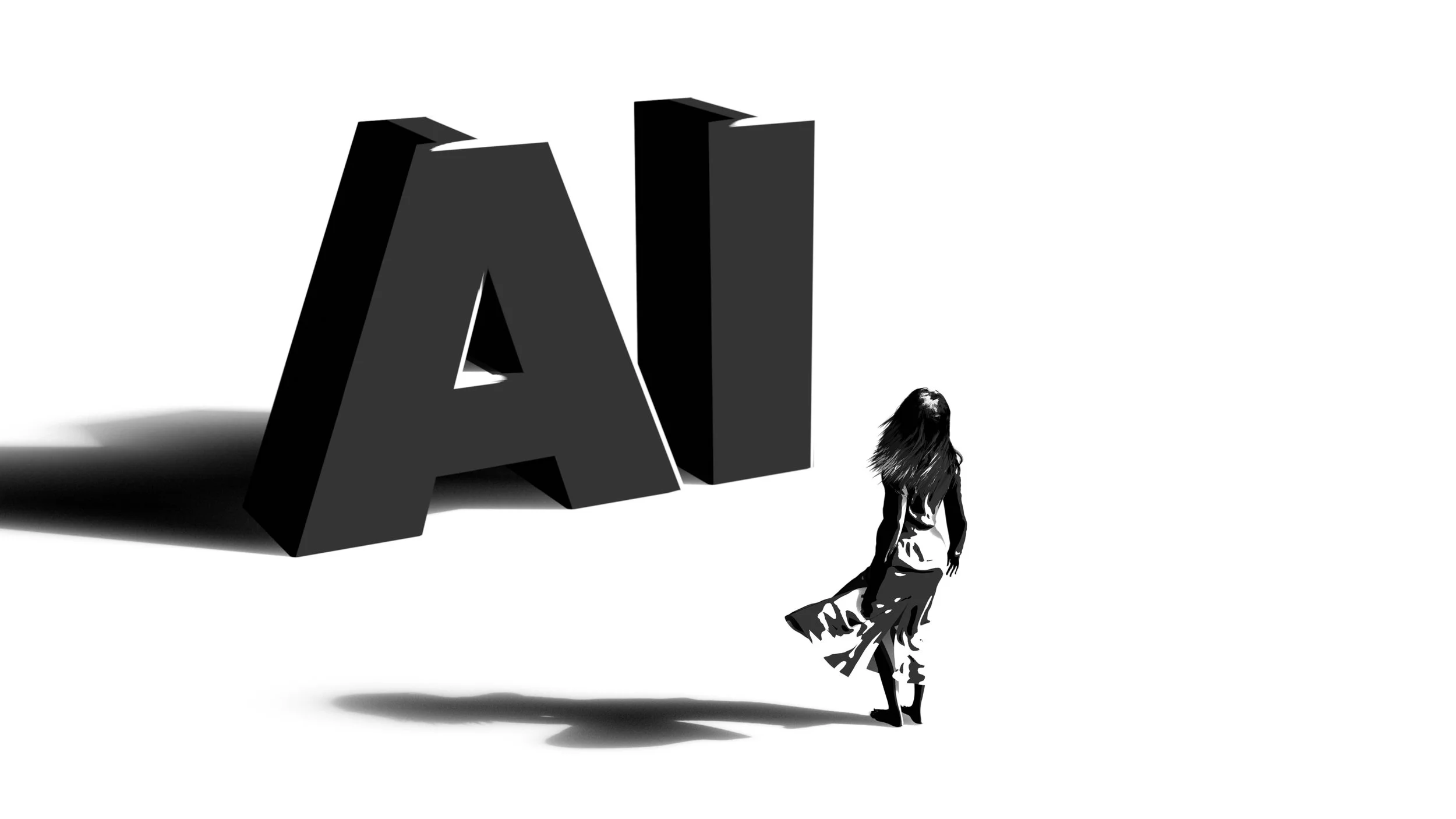
Government intervention in AI is no longer hypothetical. As XR practitioners — many of whom rely on AI for generative content, real-time translation, accessibility tools, and training simulations — we need to think seriously about redundancy, multi-model strategies, and advocacy. The question of who controls AI infrastructure is also a question of who controls our work.
Stay informed. Stay loud. And maybe don't put all your prompts in one API. What are some things we should be thinking about?
How many of our XR projects rely on a single AI provider, and what's our backup if access disappears overnight?
Should XR developers be prioritizing open-source or locally-hosted models to reduce exposure to government directives?
Who is representing XR creators — especially women and underrepresented voices — in AI policy conversations? Are we at the table?
As spatial computing moves toward AI-generated environments and NPCs, how do we build resilience into XR experiences that won't break when a model goes offline?