

By Christine Hobbi
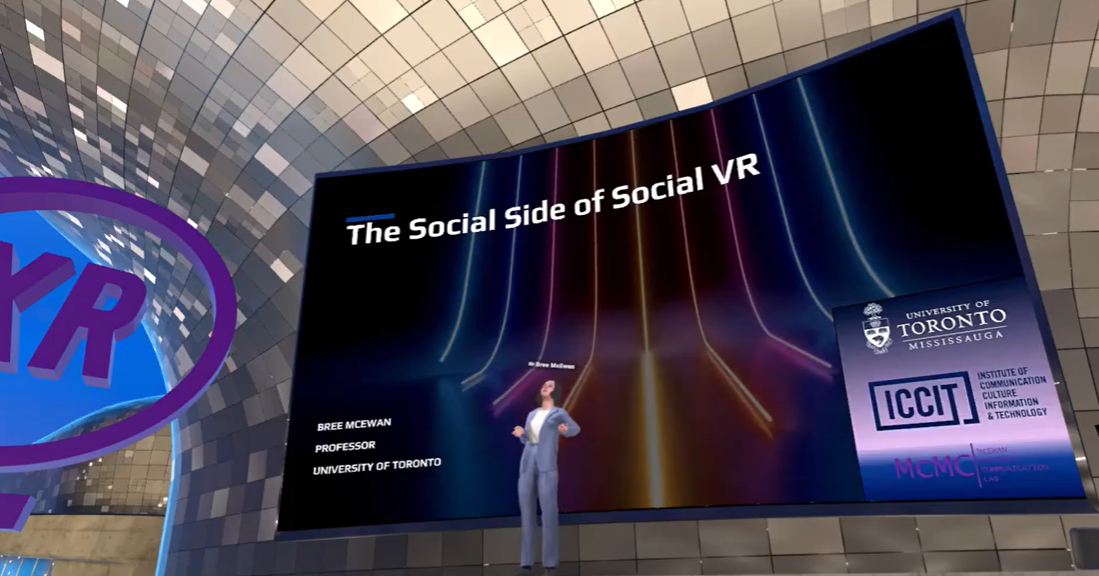
We've spent decades studying how people connect — across a dinner table, over a phone, through a screen. But what happens when the screen disappears and you're inside the conversation? That's the question driving a new wave of social science research, and it's exactly what communication scholar Bree McEwan explores in her fascinating talk, The Social Side of VR.
McEwan, an associate professor at the University of Toronto and director of the McEwan Mediated Communication Lab, has spent years examining what happens to human interaction when it moves into virtual reality. Her work sits at the intersection of interpersonal communication, avatar behavior, and emerging technology — and her findings challenge some of our most basic assumptions about what makes connection feel real.
It's Still Human Behavior — Just With a New Body
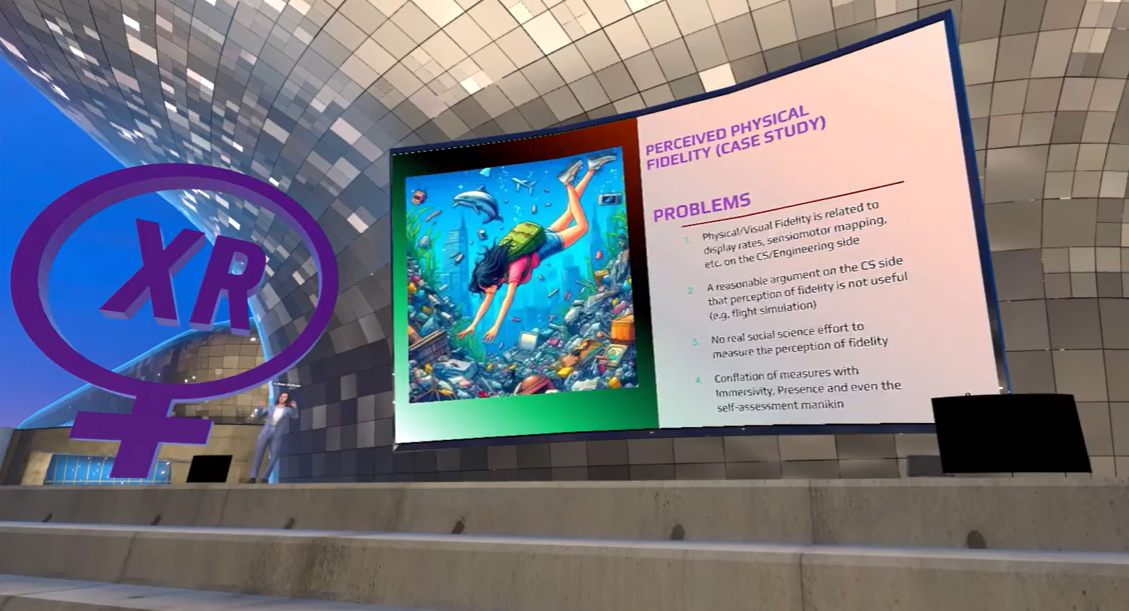
One of the most striking insights from this field is how quickly people import their real-world social instincts into virtual spaces. Personal space, eye contact, turn-taking, nonverbal cues — these behaviors don't disappear in VR. They migrate. Research from McEwan's lab and others consistently shows that people respond to avatar behavior the same way they respond to human behavior: with trust, discomfort, warmth, or withdrawal, depending on what the avatar does.
This matters enormously for how we design virtual environments. If a platform ignores the social dynamics that govern human interaction, users feel it — even if they can't always name why something feels "off."
The Avatar Problem
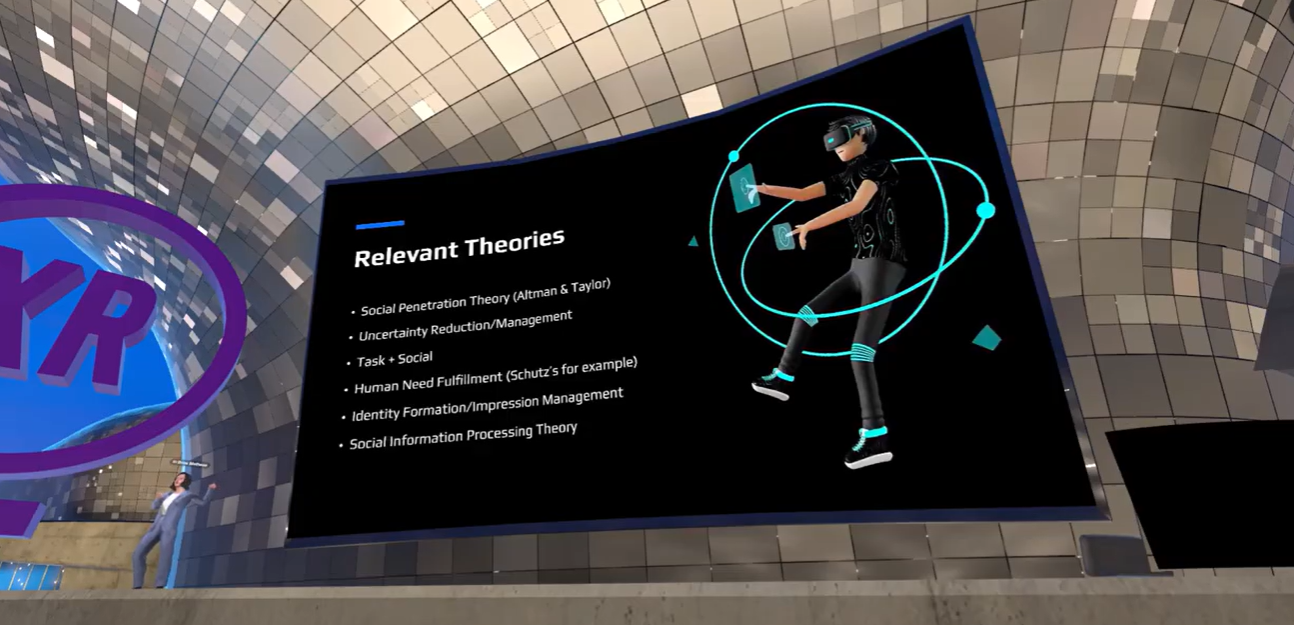
Your avatar is both you and not you. It represents you, but it also shapes how others perceive you and, fascinatingly, how you perceive yourself. Studies show that the behavioral realism of an avatar — how naturally it mirrors your movements, gestures, and expressions — directly affects the quality of social interaction in VR. Higher realism leads to greater trust, more authentic self-disclosure, and stronger feelings of social presence.
This raises a critical design question: are we building virtual spaces that support genuine human connection, or ones that only simulate its surface?
Why This Research Matters Now
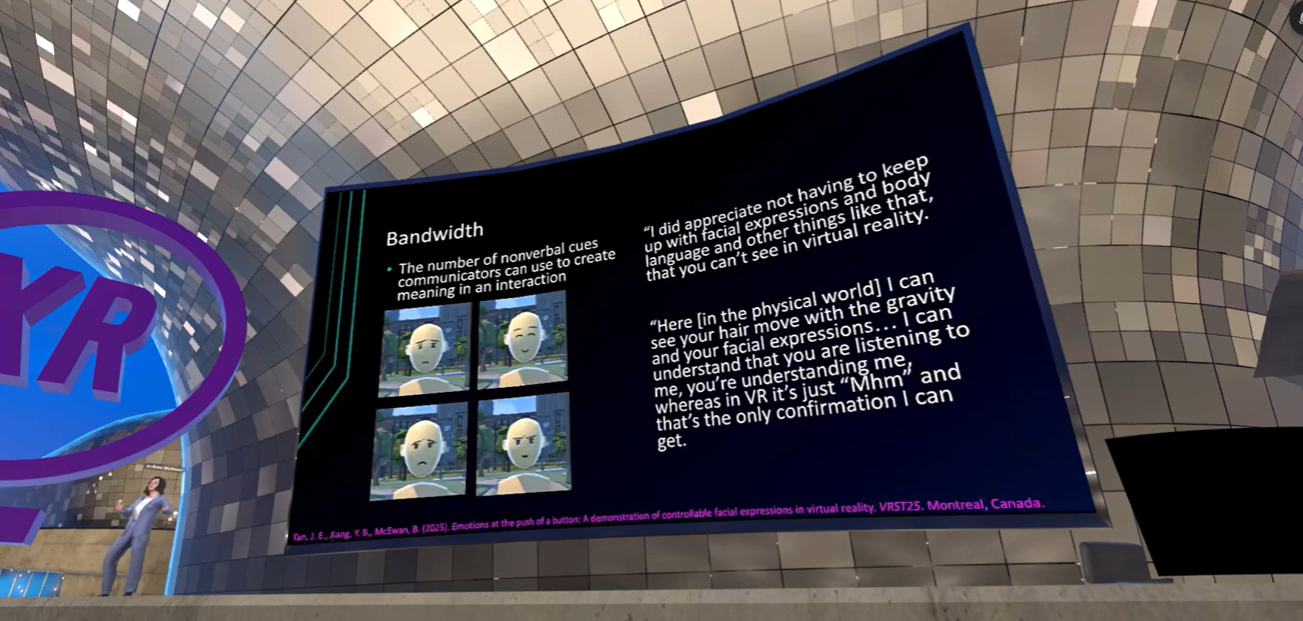
As VR platforms mature and the metaverse becomes less a buzzword and more a daily reality for education, work, and community, the social science of these spaces is no longer academic. It's practical. Understanding how people form impressions, build trust, and communicate nonverbally in virtual environments will determine whether these platforms succeed as genuinely human spaces — or remain technically impressive but socially hollow.
McEwan's work is a reminder that the most important questions about VR aren't technical. They're human.
Watch the full talk on YouTube and decide for yourself: Bree McEwan The Social Science of VR 05 20 26
Is virtual connection the future of human relationship — or just a very convincing imitation?
Comment on XR Women Slack: https://xrwomen.slack.com/archives/C0AF89CUWG5